
The Forge: How Doctors Get Made
Becoming a primary care physician is a demanding enterprise.
You need the undergraduate degree, of course — four years for most people, unless you're like me and majored in English because you thought it would make you a better songwriter, in which case add two and a half more years to go back and knock out biology, physics, chemistry, and calculus.
Then there's medical school: an immersive baptism by firehose into the culture of medicine, a crucible where the heat of the new environment vaporizes your hobbies, your free time, and your sleep schedule. Over four arduous years everything you were gets liquified, and what's left is raw, unrefined potential — which then gets fed, if you're lucky enough to match, into the forge of residency. There, across eighty to a hundred and twenty hour weeks, you are repeatedly struck, shaped, and tempered into a functioning blade.
Three years of residency is the minimum to make a pediatrician, a family doctor, or an internist. Med-peds takes four. These are your primary care doctors.
The transformation is profound enough that it reorganizes people's lives around it. Relationships end during medical school and new ones form inside it, forged in the shared experience of meeting unprecedented challenges at an unprecedented rate. Spouses routinely remark that medical school turned their partner into a completely different person.
10,000 Patients Is Not the Answer
There is no AI agent that turns 26.7 hours into 24. There is no software that makes 10,000 relationships fit inside one human life. What software can do — what it is very good at doing — is generate the appearance of coverage. Messages get answered. Refills get approved. Boxes get checked. Quality metrics look outstanding. And the doctor whose name is on the panel has never laid eyes on the overwhelming majority of the people in it.
That isn't primary care. That's a call center with a medical license attached to it.
Ten thousand is a number you can put on a slide. It is not a number you can put in a waiting room.
If DPC Is So Great, Why Isn't Everyone Doing It?
Direct Primary Care is a remarkable model. Unlimited access to your doctor. A physician working at the top of their scope, so you're not waiting weeks for a costly referral. Long visits with time to discuss whatever is actually on your mind. Wholesale access to labs, medications, and imaging. And the chance to make medical decisions without a payor in the room — no insurance company weighing in on the plan you and your doctor developed together. Doctors in DPC talk constantly about rediscovering the joy of medicine. Patients say that until they met their DPC doc, it never really felt like anyone listened to them. The model is growing fast — DPC membership is up 837% per capita since 2017 — and there still aren't nearly enough practices to serve everyone who wants this.
So if it's so great, why isn't it catching on faster?
Hiding in Plain Sight: Direct Primary Care Grew 837% — and Most People Still Haven't Heard of It
Nationally, the picture is striking. Hint Health's 2026 Direct Primary Care Trends Report — drawing on data from more than 2,700 clinicians and 1.4 million members — found that DPC membership grew 837% per capita between 2017 and 2025, far outpacing population growth. Clinician participation grew 555% per capita over the same period, and patient demand is still outrunning the supply of DPC physicians. There are now DPC practices in all 50 states, and Colorado remains one of the most concentrated markets in the country.
The report also found that the majority of active DPC memberships nationwide are now paid for by employers — and that employer-sponsored DPC pricing has stayed remarkably steady over the last five years, in sharp contrast to the volatility of traditional insurance.
That's growth from roughly 100 practices in 2009 to several thousand today.
And yet: with about 342 million people in this country, a few thousand practices is still a rounding error. So maybe I shouldn't be so shocked when someone hasn't heard of us.
Still — from 100 practices to a movement operating in every state in fifteen years, with no sign of slowing.

The Root Cause of the Beef Between Functional and Conventional Medicine
One camp criticizes the other for lack of evidence. The other criticizes the first for rigidity and poor evidence. Fingers point, blame gets assigned, and patients are left confused. Somewhere in the middle of it, physicians are dismissive of the work nurse practitioners do, and nurse practitioners resent having the gate to independent clinical practice kept by physicians.
Here's a thought. Our nature as human beings may prevent us from judging a behavior in someone else unless we've also expressed it ourselves. You can't recognize a thing well enough to judge it unless it lives in you somewhere.
And what all of us are really judging in each other is the thing we fear most: that we don't know enough. That the work of caring for other human beings is endless, all-encompassing, Sisyphean — and that we're messing it up all over the place. It's so much easier to call that out when you suspect it in someone else than to admit you're the one working with a crucial knowledge deficit.
So we recognize our own lack of information and name it in others. Meanwhile the fact persists: no matter what we know, we don't know everything. And the day we do is no closer now than it was a century ago — even though, by one widely-cited estimate, the doubling time of medical knowledge has collapsed from about 50 years in 1950 to a projected 73 days as of 2020.

100 Members: Why I Left the System to Build a Direct Primary Care
Conventional medicine runs on a "fee-for-service" model. It's exactly what it sounds like: a doctor does a thing, and that thing is worth a fee. A well exam commands one price, a knee injection another, an ER trauma evaluation another, a colonoscopy another. There are over 10,000 distinct services, each with its own special code — and doctors are responsible not just for doing the service but for documenting the exact codes in their notes so the insurance company will pay them for the work.
Here's the wrinkle. Even as inflation drives up the cost of running a practice, insurers — whose rates track whatever Medicare does — pay meaningfully less per service than they used to. Adjusted for inflation in practice costs, Medicare physician payment has fallen 33% since 2001, even as the cost of actually running a practice rose 59%. Rent, medical supplies, staff wages, malpractice premiums — all dramatically more expensive. The work of doctoring itself? Worth about a third less than it was twenty years ago.
This is a sinking ship. It's why the work in conventional medicine has become impossible — and why fresh-faced new doctors, full of good intentions and thrown to the wolves the day they graduate, come to believe that any failure to keep pace with their employer's demands is a personal moral failing. It isn't. It's math.
Nearly 78% of physicians are now employed by a hospital system or corporate entity trying to stay solvent in this climate. Only about one in five find their way to private practice.

What's Your Doctor Like? On Burnout, Distance, and a Better Way
When I talk to people about their doctors, I get every kind of story. Some really liked theirs — or did, until that doctor "left." Quit the job, moved to another clinic, maybe left medicine altogether. Those patients approach finding the next doctor with extreme caution, and they were guarded in the exam room where I first met them as that new, unproven face.
Others are in my office precisely because their last doctor was "terrible" — didn't listen, seemed to have an agenda, or came up short on the very things the patient wanted to discuss. Same trepidation. Meeting a new doctor makes people nervous. They're cautious, reluctant to give too much, still feeling the sting of the last time they opened up to a physician — and determined not to feel that rejection again.

An N of 1: Why I Left Corporate Medicine for Midlife Care
If you've felt dismissed by modern medicine while trying to explain something that doesn't fit neatly in a box — if you're being driven toward ordering your labs from a Facebook ad, spending hundreds of dollars for an alternative non-physician healer, or signing up with a weight-loss club or a hormone mill for something your doctor can’t or won’t consider prescribing— let me offer one suggestion. Don't give up on Western medicine just yet. Find a direct primary care doctor willing to help you ask and answer personalized questions, without worrying about what your insurance will cover, and without trying to force your square peg into the round hole that fee-for-service medicine confines itself to.






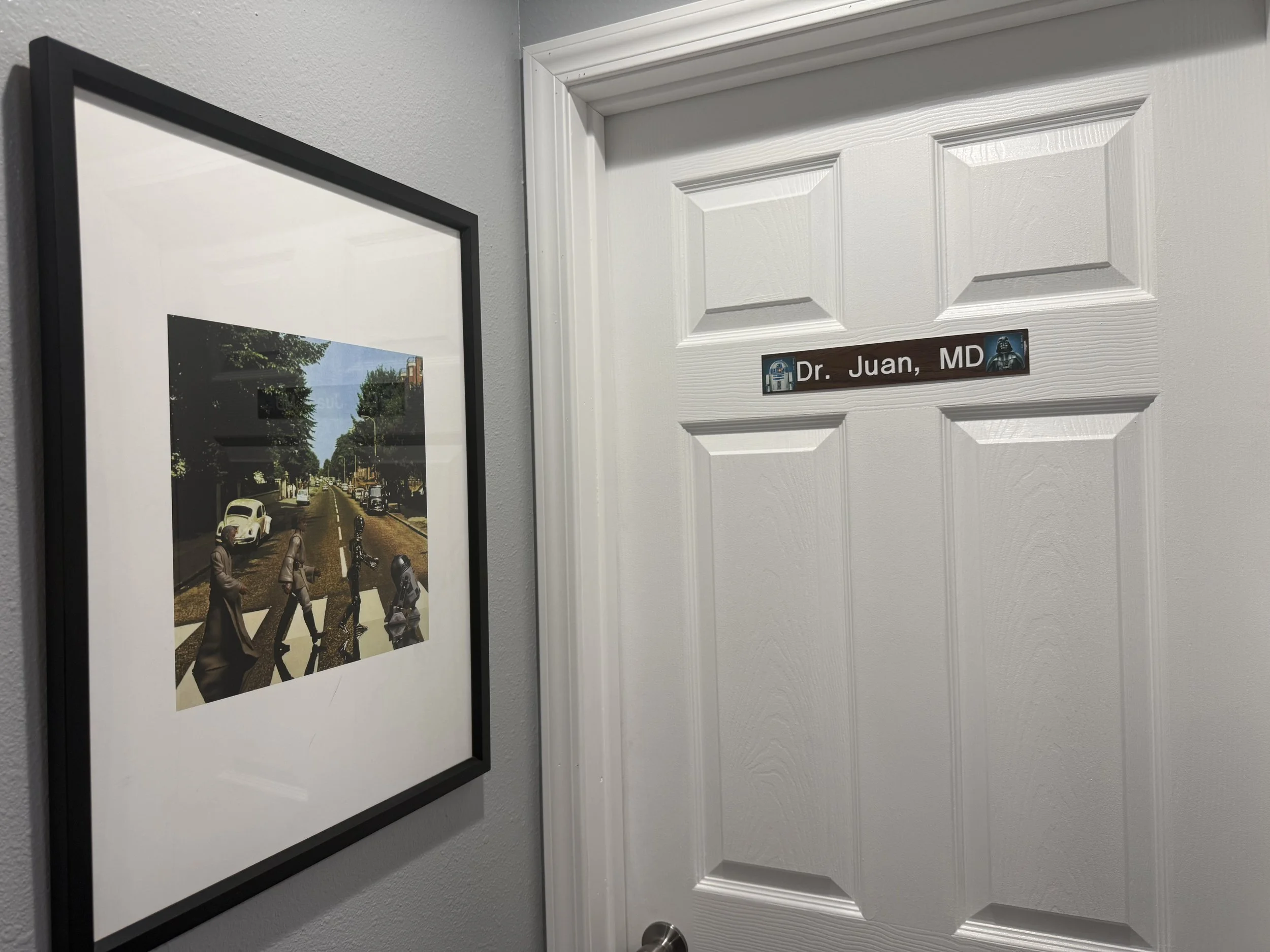
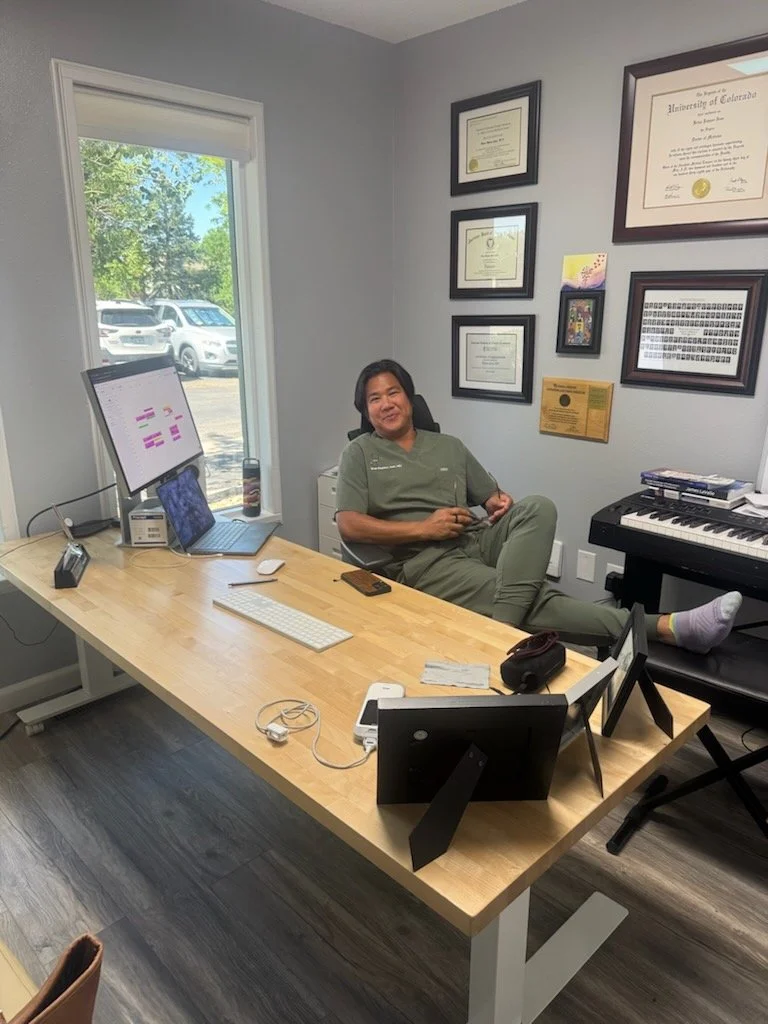

DPC Week One
It's been seven months since I started seriously planning this, and one week since I actually became a Direct Primary Care doctor.
The massive to-do list didn't evaporate when I left corporate medicine — it just changed shape. But now it hits different: every task on it moves me closer to an authentic version of how I want to practice medicine. I get to prioritize my patients in a way that simply wasn't possible when I was juggling 2,500 of them alongside the administrative weight of fee-for-service care.
Here's a couple of things that stood out in week one.
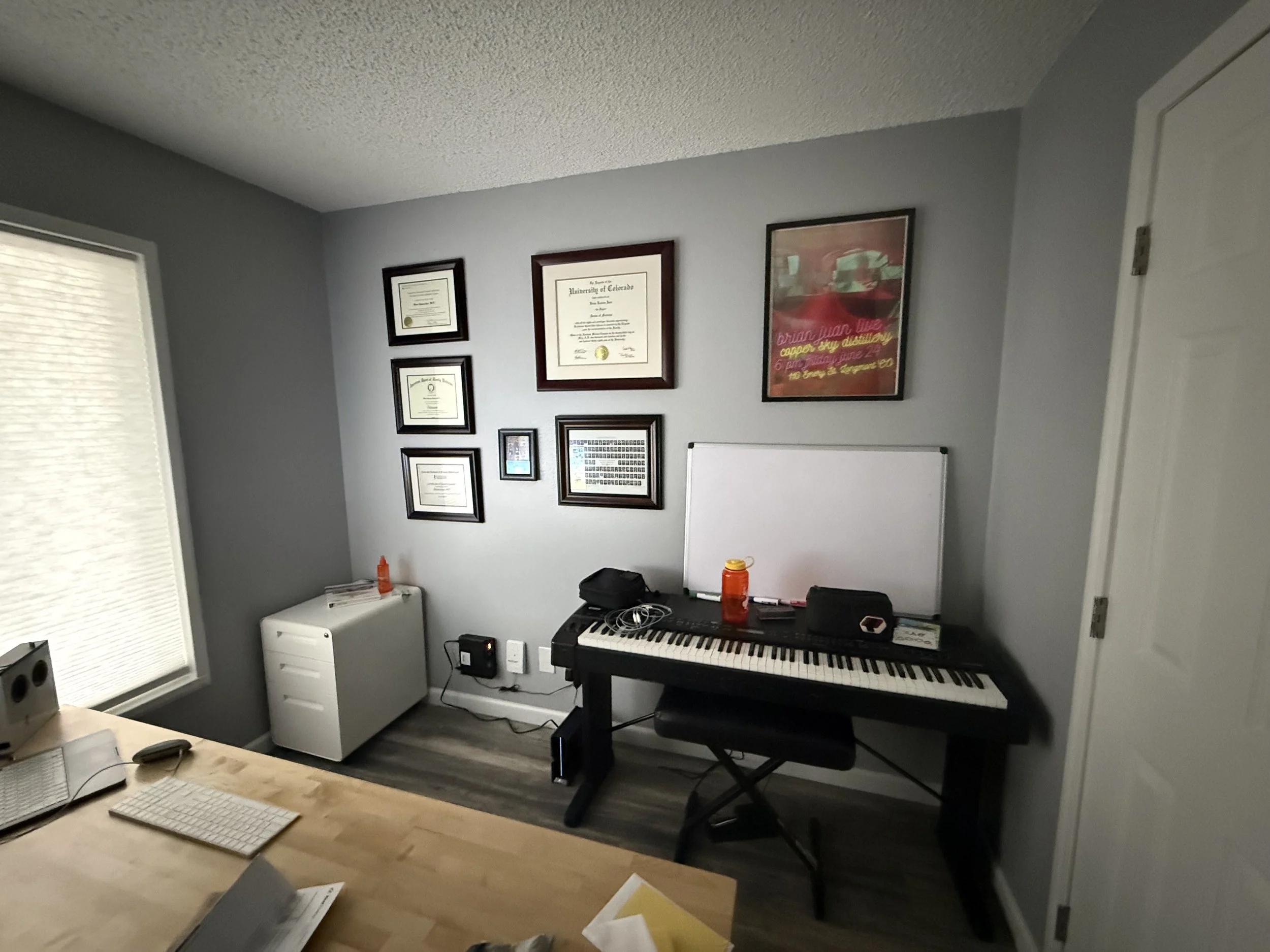


Midlife Hormones, Medical Training, and an Open Mind — A Direct Primary Care Doctor's Journey
Estradiol is not associated with increased breast cancer risk — that's synthetic progestins. Bioidentical hormone replacement therapy may actually lower breast cancer risk. Transdermal estrogen carries no meaningful increased clotting risk, even in patients with prior clots. Women and men both benefit from testosterone — for libido, mood, energy, cognition, muscle mass, and bone density. And a man's prostate is fully saturated at a serum testosterone level of 250 — the common "normal" cutoff — meaning higher levels don't increase prostate cancer risk.
None of this is medical advice. It's an honest account of how the things I was taught had to be unlearned and replaced — years after training ended — because I stayed curious.