100 Members: Why I Left the System to Build a Direct Primary Care
Conventional medicine runs on a "fee-for-service" model. It's exactly what it sounds like: a doctor does a thing, and that thing is worth a fee. A well exam commands one price, a knee injection another, an ER trauma evaluation another, a colonoscopy another. There are over 10,000 distinct services, each with its own special code — and doctors are responsible not just for doing the service but for documenting the exact codes in their notes so the insurance company will pay them for the work.
Here's the wrinkle. Even as inflation drives up the cost of running a practice, insurers — whose rates track whatever Medicare does — pay meaningfully less per service than they used to. Adjusted for inflation in practice costs, Medicare physician payment has fallen 33% since 2001, even as the cost of actually running a practice rose 59%. Rent, medical supplies, staff wages, malpractice premiums — all dramatically more expensive. The work of doctoring itself? Worth about a third less than it was twenty years ago.
This is a sinking ship. It's why the work in conventional medicine has become impossible — and why fresh-faced new doctors, full of good intentions and thrown to the wolves the day they graduate, come to believe that any failure to keep pace with their employer's demands is a personal moral failing. It isn't. It's math.
Nearly 78% of physicians are now employed by a hospital system or corporate entity trying to stay solvent in this climate. Only about one in five find their way to private practice.
A year ago, I decided to become one of them.
An Uncertain Path
The model I wanted was unclear at first. I just had interests.
Compounded GLP-1 medications, for one. Endorsed a couple of years ago when these drugs were in shortage, then frowned upon a year later — but still the most reliable way for many of my patients (and me) to access medications insurers wouldn't cover. I was also becoming aware of how poorly conventional medicine handled menopause and perimenopause — mostly through patients who were getting hormone replacement outside my organization while still seeing me for primary care. I'd learned an approach to perimenopause and menopause that was flourishing in private practice and quietly discouraged in my corporate setting.
So I started exploring.
The Concierge Detour
First I looked at concierge medicine. Pioneered in the late '90s as "boutique medicine" — doctors charging fees for luxury care — it evolved in the early 2000s into something more familiar: normal procedures still billed to insurance, but perks like same-day access, comprehensive physicals, and extra time covered by a membership fee. In its current form, concierge practices work alongside insurance while keeping panels small by charging roughly $2,000–$3,000 a year. (Ultra-luxury versions charge well beyond that.)
I thought concierge might be the ideal venue for the enhanced hormone optimization and midlife vitality I was chasing myself — having entered my fifties and personally explored compounded GLP-1s for weight management, with dramatically positive results.
I understood that struggle from the inside, and for years I'd cared for patients growing despondent about their weight. The tools we had before GLP-1s often failed, and my visits frequently became less about weight than about treating the depression that came with feeling out of control. Through my own years of yo-yo dieting, I knew the frustration of midlife weight gain and energy loss — how reversing the changes felt increasingly out of reach, and how conventional medicine seemed preloaded with a dismissiveness that could only have been bred by an impossible schedule. Doctors chase solutions. Midlife doesn't offer easy ones, and none of them are taught in conventional training. Hormone replacement clinics get written off as dangerous outliers by physicians who seem to forget that the one constant in medical knowledge is evolution — today's unknowns are exactly what drive tomorrow's better outcomes. Compounded tirzepatide made me living proof of that.
Finding Direct Primary Care
While researching concierge care, I kept bumping into something else: Direct Primary Care.
DPC is distinctly not concierge. It took root in the early 2010s around a modest monthly fee — today usually $70–$150 — and one radical move: cutting out insurance entirely. I'd met DPC doctors at the Colorado Academy of Family Physicians’ summits while finishing med school and residency. They all seemed happy, and they all said the same thing: this model let them return to the idyllic practice of medicine they'd imagined for themselves when they decided, “I want to be a doctor.”
That mattered to me, because of why I chose family medicine in the first place: the sheer versatility.
What a Family Doctor Can Do
We care for patients cradle to grave — birth to hospice, and everything in between. We're trainable, and we can do nearly any procedure that doesn't require putting a patient to sleep. We do skin checks as well as dermatologists, but we also do the joint injections you'd get at ortho. We manage depression and ADHD as capably as a psychiatrist — but we also carry stethoscopes, diagnose your atrial fibrillation, and manage heart failure like a cardiologist. We follow the same steps as pulmonology for asthma and COPD, and walk patients through IBS with the same tools as gastroenterology. We test and treat allergies like an immunologist. We'll remove your ingrown toenail so you can skip the podiatrist, or drain your abscess so you can skip the surgeon. Plus the colds, the UTIs, the sinus infections, the splinters — and every preventive recommendation there is, from vaccines to cancer screening.
If your plane goes down on a desert island, it's a family doctor you want surviving the crash with you.
Why I Chose DPC
Concierge family doctors still have to deal with insurers who pay them less every year. I knew that wasn't for me. So I opened my Direct Primary Care practice on the eastern edge of Boulder County— and getting to make decisions with my patients, without an insurance company second-guessing my clinical judgment, has been every bit as gratifying as my colleagues promised a decade ago.
100 Members
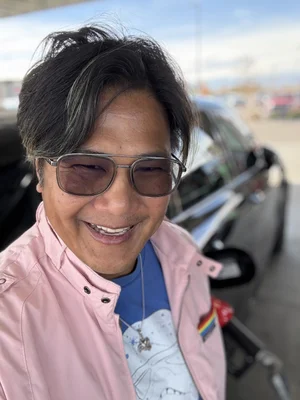
Metronome Family Medicine, right here in Longmont, a five minute walk from the house my wife and I bought at the height of the pandemic, hit 100 members today.
I didn't even know until I just looked. I'm stunned.
To those of you who are here: please accept my heartfelt thanks for trusting me as your physician. DPC is all about a doctor running their own show — and I'm thrilled you're all here for the set. :)
And to those of you still on the fence: I'm still accepting new members. Get in touch.
📞 720-856-4058 🔗 www.metronomemd.com